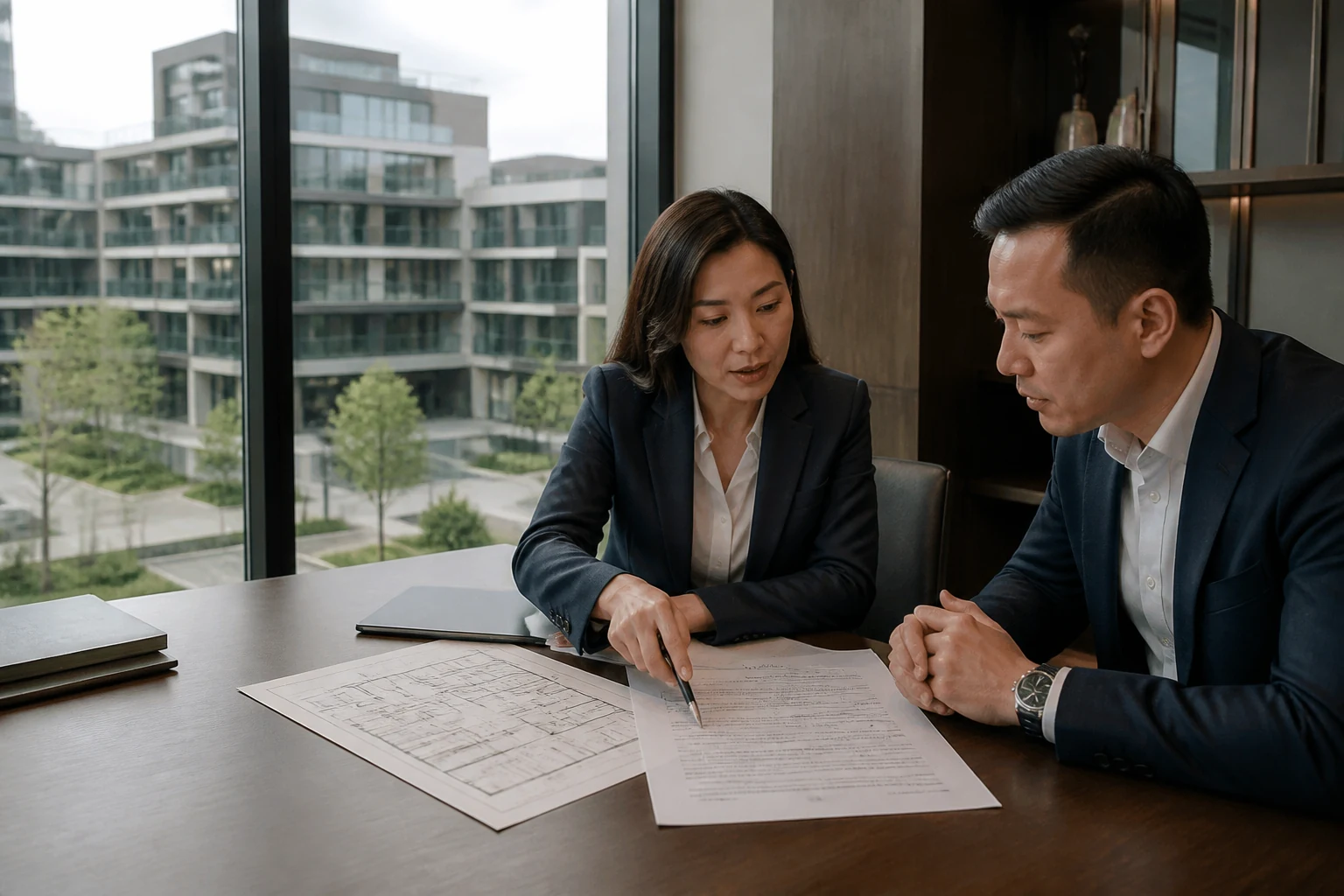
Module 1: Real Estate Vocabulary Categories
Use these categories as a working glossary. Pronunciation is in standard Hanyu Pinyin; English definitions reflect common business usage. Chinese property law, measurement conventions, and transaction procedures can vary by jurisdiction, so confirm local meanings in actual deals.
Property Types — 20 words
| # | Chinese | Pinyin | English |
|---|---|---|---|
| 1 | 房产 | fáng chǎn | real estate; property |
| 2 | 住宅 | zhù zhái | residence; residential property |
| 3 | 商业地产 | shāng yè dì chǎn | commercial real estate |
| 4 | 写字楼 | xiě zì lóu | office building |
| 5 | 工业园区 | gōng yè yuán qū | industrial park |
| 6 | 公寓 | gōng yù | apartment |
| 7 | 别墅 | bié shù | villa |
| 8 | 商铺 | shāng pù | retail unit; shop premises |
| 9 | 仓库 | cāng kù | warehouse |
| 10 | 土地 | tǔ dì | land |
| 11 | 办公空间 | bàn gōng kōng jiān | office space |
| 12 | 购物中心 | gòu wù zhōng xīn | shopping center |
| 13 | 酒店 | jiǔ diàn | hotel |
| 14 | 物流园区 | wù liú yuán qū | logistics park |
| 15 | 产业园 | chǎn yè yuán | industrial or technology park |
| 16 | 学区房 | xué qū fáng | school-district housing |
| 17 | 保障性住房 | bǎo zhàng xìng zhù fáng | subsidized or affordable housing |
| 18 | 新房 | xīn fáng | newly built home; new property |
| 19 | 二手房 | èr shǒu fáng | resale property |
| 20 | 混合用途物业 | hùn hé yòng tú wù yè | mixed-use property |
Transaction Vocabulary — 30 words
| # | Chinese | Pinyin | English |
|---|---|---|---|
| 1 | 买卖 | mǎi mài | buying and selling |
| 2 | 租赁 | zū lìn | leasing; rental |
| 3 | 价格 | jià gé | price |
| 4 | 面积 | miàn jī | area; floor area |
| 5 | 产权 | chǎn quán | property rights; title |
| 6 | 房源 | fáng yuán | property listing; available property |
| 7 | 买方 | mǎi fāng | buyer |
| 8 | 卖方 | mài fāng | seller |
| 9 | 经纪人 | jīng jì rén | real estate agent; broker |
| 10 | 看房 | kàn fáng | view a property |
| 11 | 报价 | bào jià | make an offer; quote a price |
| 12 | 议价 | yì jià | negotiate the price |
| 13 | 定金 | dìng jīn | deposit (term can have specific legal meaning) |
| 14 | 首付款 | shǒu fù kuǎn | down payment |
| 15 | 合同 | hé tong | contract |
| 16 | 签约 | qiān yuē | sign an agreement |
| 17 | 过户 | guò hù | transfer title/registration |
| 18 | 交割 | jiāo gē | closing; handover/settlement |
| 19 | 付款方式 | fù kuǎn fāng shì | payment method |
| 20 | 贷款 | dài kuǎn | loan; mortgage loan (context-dependent) |
| 21 | 利率 | lì lǜ | interest rate |
| 22 | 物业费 | wù yè fèi | property management fee |
| 23 | 税费 | shuì fèi | taxes and fees |
| 24 | 交房 | jiāo fáng | hand over the property |
| 25 | 验房 | yàn fáng | inspect a property |
| 26 | 押金 | yā jīn | security deposit |
| 27 | 租期 | zū qī | lease term |
| 28 | 续租 | xù zū | renew a lease |
| 29 | 解约 | jiě yuē | terminate an agreement |
| 30 | 违约责任 | wéi yuē zé rèn | liability for breach of contract |
Development Vocabulary — 25 words
| # | Chinese | Pinyin | English |
|---|---|---|---|
| 1 | 开发 | kāi fā | develop; development |
| 2 | 建设 | jiàn shè | construct; construction |
| 3 | 项目 | xiàng mù | project |
| 4 | 规划 | guī huà | planning; plan |
| 5 | 用地 | yòng dì | land use; land for a purpose |
| 6 | 开发商 | kāi fā shāng | property developer |
| 7 | 建筑面积 | jiàn zhù miàn jī | gross floor area |
| 8 | 使用面积 | shǐ yòng miàn jī | usable floor area |
| 9 | 容积率 | róng jī lǜ | floor-area ratio (FAR) |
| 10 | 建筑密度 | jiàn zhù mì dù | building density |
| 11 | 土地用途 | tǔ dì yòng tú | land-use designation |
| 12 | 施工 | shī gōng | construction work |
| 13 | 施工现场 | shī gōng xiàn chǎng | construction site |
| 14 | 承包商 | chéng bāo shāng | contractor |
| 15 | 建筑设计 | jiàn zhù shè jì | architectural design |
| 16 | 设计方案 | shè jì fāng àn | design proposal |
| 17 | 建筑许可 | jiàn zhù xǔ kě | building permit |
| 18 | 竣工 | jùn gōng | complete construction |
| 19 | 竣工验收 | jùn gōng yàn shōu | completion inspection and acceptance |
| 20 | 基础设施 | jī chǔ shè shī | infrastructure |
| 21 | 配套设施 | pèi tào shè shī | supporting facilities; amenities |
| 22 | 可持续建筑 | kě chí xù jiàn zhù | sustainable building |
| 23 | 改造 | gǎi zào | renovation; redevelopment |
| 24 | 项目进度 | xiàng mù jìn dù | project progress; schedule |
| 25 | 预算 | yù suàn | budget |
Investment Vocabulary — 25 words
| # | Chinese | Pinyin | English |
|---|---|---|---|
| 1 | 投资 | tóu zī | investment; invest |
| 2 | 回报 | huí bào | return |
| 3 | 升值 | shēng zhí | appreciate; appreciation |
| 4 | 租金 | zū jīn | rent |
| 5 | 物业管理 | wù yè guǎn lǐ | property management |
| 6 | 投资回报率 | tóu zī huí bào lǜ | return on investment (ROI) |
| 7 | 现金流 | xiàn jīn liú | cash flow |
| 8 | 收益 | shōu yì | income; yield |
| 9 | 净收益 | jìng shōu yì | net income; net return |
| 10 | 租金收益率 | zū jīn shōu yì lǜ | rental yield |
| 11 | 空置率 | kōng zhì lǜ | vacancy rate |
| 12 | 运营成本 | yùn yíng chéng běn | operating costs |
| 13 | 维护成本 | wéi hù chéng běn | maintenance costs |
| 14 | 估值 | gū zhí | valuation |
| 15 | 市场价值 | shì chǎng jià zhí | market value |
| 16 | 投资回收期 | tóu zī huí shōu qī | payback period |
| 17 | 风险评估 | fēng xiǎn píng gū | risk assessment |
| 18 | 资产配置 | zī chǎn pèi zhì | asset allocation |
| 19 | 投资组合 | tóu zī zǔ hé | investment portfolio |
| 20 | 杠杆 | gàng gǎn | leverage |
| 21 | 融资 | róng zī | financing |
| 22 | 资本增值 | zī běn zēng zhí | capital appreciation |
| 23 | 出租率 | chū zū lǜ | occupancy rate |
| 24 | 资产负债率 | zī chǎn fù zhài lǜ | debt-to-asset ratio |
| 25 | 尽职调查 | jìn zhí diào chá | due diligence |
Module 2: Real Estate Context Examples
The examples below pair Chinese, pinyin, and English so you can understand each line and reuse its structure. Adapt figures and contract terms to the actual deal; these examples are language practice, not legal or investment advice.
Property transaction
买方:这套公寓的建筑面积是多少?
Mǎifāng: Zhè tào gōngyù de jiànzhù miànjī shì duōshao?
Buyer: What is the gross floor area of this apartment?
经纪人:建筑面积是九十平方米,具体以合同和测量文件为准。
Jīngjìrén: Jiànzhù miànjī shì jiǔshí píngfāng mǐ, jùtǐ yǐ hétong hé cèliáng wénjiàn wéi zhǔn.
Agent: The gross floor area is 90 square meters; the contract and measurement documents govern the exact figure.
Leasing negotiation
租客:如果签两年,租金可以再谈吗?
Zūkè: Rúguǒ qiān liǎng nián, zūjīn kěyǐ zài tán ma?
Tenant: If I sign a two-year lease, is the rent negotiable?
房东:可以,我们也可以一起确认续租条件和维修责任。
Fángdōng: Kěyǐ, wǒmen yě kěyǐ yìqǐ quèrèn xùzū tiáojiàn hé wéixiū zérèn.
Landlord: Yes. We can also confirm the renewal terms and maintenance responsibilities together.
Development discussion
项目经理:请问目前的项目进度符合原定计划吗?
Xiàngmù jīnglǐ: Qǐngwèn mùqián de xiàngmù jìndù fúhé yuándìng jìhuà ma?
Project manager: Is the current project progress in line with the original schedule?
开发商:主体施工已经完成,下一步是竣工验收。
Kāifāshāng: Zhǔtǐ shīgōng yǐjīng wánchéng, xià yíbù shì jùngōng yànshōu.
Developer: The main construction work is complete; the next step is the completion inspection.
Investment analysis
分析师:我们需要把空置率和维护成本纳入现金流预测。
Fēnxīshī: Wǒmen xūyào bǎ kōngzhìlǜ hé wéihù chéngběn nàrù xiànjīnliú yùcè.
Analyst: We need to include the vacancy rate and maintenance costs in the cash-flow forecast.
投资人:请同时说明估值假设和主要风险。
Tóuzīrén: Qǐng tóngshí shuōmíng gūzhí jiǎshè hé zhǔyào fēngxiǎn.
Investor: Please also explain the valuation assumptions and the main risks.
Module 3: Practice Scenarios
Practice aloud or use the prompts in an AI role-play. Ask follow-up questions, clarify assumptions, and summarize the next step in Chinese.
- Property transaction: You are the buyer viewing a commercial unit. Ask about its area, title documents, asking price, and handover date. Then make a polite offer and request time to review the contract.
- Leasing negotiation: You are comparing two office leases. Discuss rent, lease term, deposit, renewal, maintenance responsibilities, and what happens if either party ends the lease early.
- Development discussion: You are a project partner reviewing a site plan. Ask about land use, floor-area ratio, permits, construction milestones, budget, and facilities. Identify which items need confirmation by the local team.
- Investment analysis: You are presenting a property opportunity. Explain the rent assumptions, vacancy risk, operating costs, expected cash flow, valuation basis, and due-diligence items. Avoid presenting projected returns as guaranteed.
Start a guided conversation, receive corrections, and try the glossary in a realistic property discussion.
AI role-play CTA: Try Property Scenarios
Choose a transaction, lease, development, or investment scenario and practice responding in context.
Module 4: Market Terminology
Market language
- 房地产市场 (fáng dì chǎn shì chǎng) — real estate market
- 供需 (gōng xū) — supply and demand
- 市场趋势 (shì chǎng qū shì) — market trend
- 成交价 (chéng jiāo jià) — transaction price
- 挂牌价 (guà pái jià) — asking/listed price
- 租赁市场 (zū lìn shì chǎng) — rental market
Policy-related terms
- 土地政策 (tǔ dì zhèng cè) — land policy
- 规划许可 (guī huà xǔ kě) — planning permission
- 房产税 (fáng chǎn shuì) — property tax (specific tax rules vary by jurisdiction)
- 限购政策 (xiàn gòu zhèng cè) — purchase restriction policy
- 监管要求 (jiān guǎn yāo qiú) — regulatory requirements
Common industry expressions
- 以实际测量为准 (yǐ shí jì cè liáng wéi zhǔn) — subject to actual measurement
- 具体条款以合同为准 (jù tǐ tiáo kuǎn yǐ hé tóng wéi zhǔn) — specific terms are subject to the contract
- 我们需要进一步核实 (wǒ men xū yào jìn yí bù hé shí) — we need to verify further
- 请提供相关证明文件 (qǐng tí gōng xiāng guān zhèng míng wén jiàn) — please provide the relevant supporting documents
- 我们先确认双方的需求 (wǒ men xiān què rèn shuāng fāng de xū qiú) — let’s first confirm both parties’ requirements
These phrases help keep discussions precise. In a cross-border transaction, distinguish a working translation from a legally defined term, and have qualified local professionals confirm documents and obligations.
Build a practical property vocabulary
A glossary becomes useful when you can retrieve the right term under pressure. Start with the property category, then learn the words you need for the next task: viewing a unit, comparing lease terms, reviewing a project schedule, or explaining an investment assumption. Keep a personal list of unfamiliar terms and ask a counterpart to clarify regional or document-specific usage.
For a broader foundation, explore Business Chinese Vocabulary. When a conversation turns to offers, concessions, or contract terms, continue with Business Chinese Negotiation Phrases. To practice a full conversation rather than isolated terms, try real estate role-play scenarios. Related Business Chinese learning resources can help you build a study path across industries.
Frequently Asked Questions
Start with the terms that match your role: property types, area, price, title, contracts, rent, lease term, development plans, and investment metrics. This guide organizes 100 terms into four groups so you can study the vocabulary relevant to transactions, leasing, development, or analysis first.
State the topic, ask a specific question, and confirm the answer. For example: 这套物业的租期是多久? (Zhè tào wùyè de zūqī shì duōjiǔ? — “What is the lease term for this property?”). For important details, ask for supporting documents and confirm that the written contract matches the discussion.
Prepare your priorities before the meeting, use clear questions, and discuss one term at a time—such as price, deposit, lease length, handover, or repairs. You can say 这个价格还有协商空间吗? (Zhège jiàgé hái yǒu xiéshāng kōngjiān ma? — “Is there room to discuss this price?”). Summarize agreed points and have qualified professionals review binding terms.
Describe the assumptions behind the analysis, including rent, occupancy or vacancy, operating and maintenance costs, financing, valuation, and risks. Use terms such as 现金流 (xiànjīnliú, cash flow) and 尽职调查 (jìnzhí diàochá, due diligence). Treat forecasts as estimates, not guaranteed outcomes.